




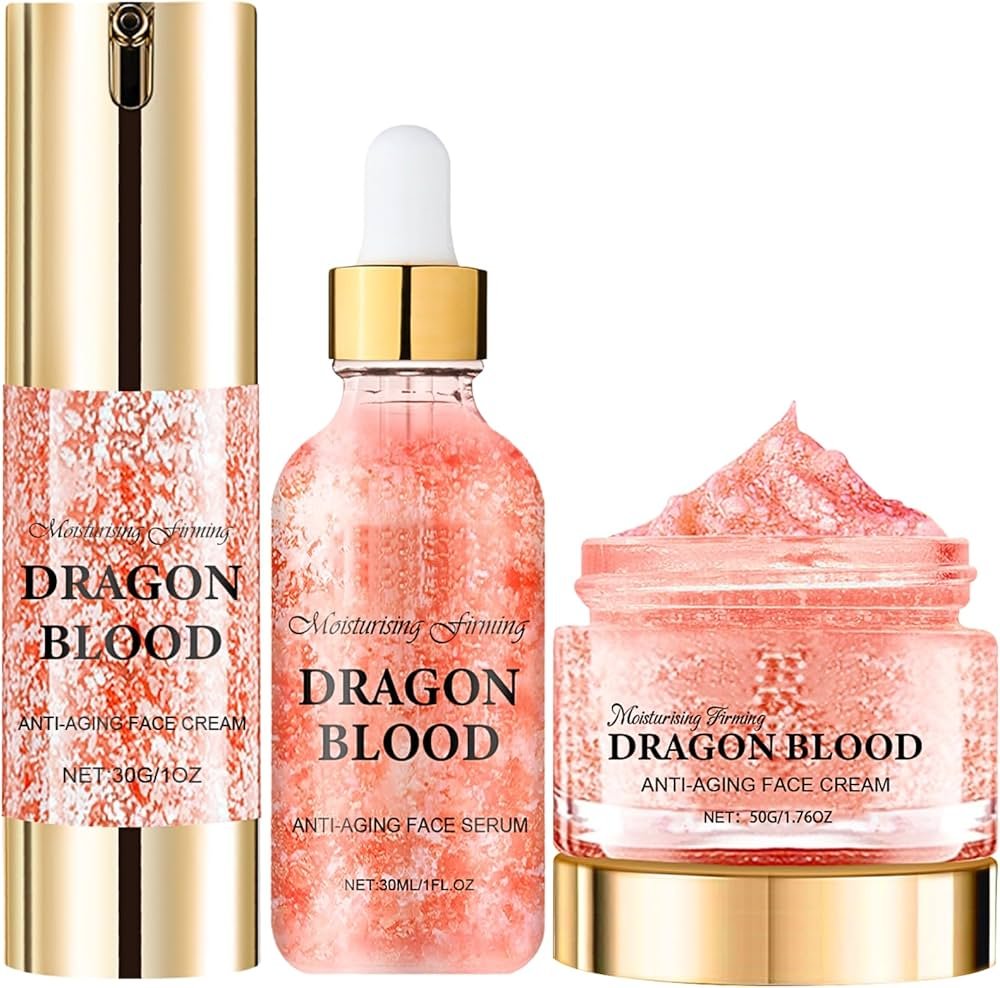
The most compelling ingredient stories in contemporary skincare share a common structure — a history of traditional use that predates clinical research by generations, followed by the scientific investigation that explains what practitioners already knew through observation and outcome. Retinoids trace back to vitamin A therapies documented across centuries of dermatological practice. Salicylic acid derives from willow bark preparations used in ancient medicine. The pattern repeats because the most effective interventions on human biology are rarely discovered by modern science in isolation — they are validated by it. Dragon blood skincare follows this pattern precisely, and understanding both dimensions of its story — the traditional foundation and the scientific validation — is what positions it as one of the more credible ingredient narratives in the contemporary beauty market rather than simply one of the more dramatic ones.
The Traditional Foundation That Precedes the Science
Dragon’s blood — the deep red resin harvested from the Croton lechleri tree in the rainforests of South America — has been used topically by indigenous communities across Peru, Ecuador, Colombia, and Bolivia for centuries. The applications documented across that history of use are not incidental or ceremonial. They are clinical in the practical sense of the word — wound healing, skin inflammation management, infection control, and the treatment of skin conditions that required an observable, repeatable therapeutic response to sustain their place in traditional medicine across generations of use.
This history matters in a modern skincare context for a reason that goes beyond the appeal of an origin story. Traditional use across a long historical baseline represents a form of empirical evidence that precedes and complements controlled clinical research — a demonstration that the bioactive compounds in dragon’s blood interact with human skin in therapeutically meaningful ways under real-world conditions, across diverse populations, over an extended period. When modern phytochemical research subsequently identifies the specific compounds responsible for those therapeutic effects and characterises their mechanisms of action, it is confirming and explaining a historical observation rather than discovering an entirely new intervention.
The Bioactive Profile That the Science Has Characterised
The phytochemical investigation of Croton lechleri resin has identified a concentrated profile of bioactive compounds whose individual mechanisms of action collectively account for the therapeutic properties observed in traditional use — and whose cosmetic applications map directly onto the skin concerns most relevant to women in the beauty and wellness demographic that dragon blood skincare addresses.
Taspine is the primary alkaloid in dragon’s blood resin and the compound most extensively studied for its wound-healing and anti-inflammatory properties. Clinical research has demonstrated taspine’s ability to stimulate fibroblast migration and proliferation — the process by which the collagen-producing cells of the dermis move toward areas of skin stress or damage and initiate the repair and regeneration process. In a cosmetic application, this mechanism translates into support for skin renewal, improvement in the appearance of fine lines, and a contribution to the firmness and resilience of skin that has experienced the collagen decline associated with intrinsic aging.
Proanthocyanidins represent the dominant antioxidant compound class in dragon’s blood resin — polyphenolic structures whose free radical scavenging capacity has been characterised as among the more potent identified in plant-derived skincare ingredients. The oxidative stress generated by daily UV exposure, environmental pollution, and the natural metabolic processes of skin cells is one of the primary accelerants of visible skin aging — degrading collagen and elastin, disrupting cellular signalling, and generating the cumulative photodamage that expresses as uneven tone, textural change, and loss of luminosity over time. A topically applied antioxidant system capable of neutralising that oxidative load at the skin surface provides a genuine protective function that compounds in value across years of daily use.
Lignans and phenolic acids round out the bioactive profile of dragon’s blood, contributing antimicrobial activity that supports the skin microbiome environment and anti-inflammatory modulation that addresses the chronic low-grade inflammation increasingly recognised as a driver of accelerated skin aging in adult women across the demographic most engaged with premium skincare.
Why the Skin Barrier Dimension Is Underappreciated
The wound-healing and antioxidant properties of dragon’s blood attract the most discussion in the beauty media context — they are the properties that translate most directly into the anti-aging positioning that drives consumer engagement with premium skincare. The skin barrier dimension of dragon’s blood activity is less frequently foregrounded but arguably more broadly relevant to the actual skin concerns of the women most likely to incorporate dragon blood skincare into a daily routine.
The skin barrier — the outermost layer of the epidermis whose lipid matrix regulates transepidermal water loss, filters environmental aggressors, and maintains the surface pH that supports normal skin microbiome function — is the foundational structure that determines how effectively everything applied to the skin surface, including other active ingredients, reaches and performs in the dermal environment below.
A compromised skin barrier — whether from environmental stress, aggressive treatment regimens, hormonal changes, or the natural reduction in barrier lipid production that accompanies aging — produces a cascade of skin concerns that no amount of active ingredient application fully resolves while the barrier itself remains impaired. Dryness, sensitivity, reactivity to previously tolerated ingredients, and the paradoxical situation of applying hydrating products without retaining the hydration they deliver are all expressions of barrier compromise rather than independent conditions requiring separate interventions.
Dragon’s blood addresses the skin barrier through the anti-inflammatory activity of taspine — reducing the inflammatory signals that disrupt tight junction proteins and barrier lipid synthesis — and through the direct barrier-supportive properties of its phenolic compounds. For women dealing with sensitive, reactive, or aging skin alongside their anti-aging concerns, this dual activity — barrier support alongside regenerative and antioxidant functions — makes dragon blood skincare a particularly well-matched intervention.
The Formulation Context That Determines Whether the Ingredient Delivers
The ingredient story of dragon’s blood is compelling. The formulation context in which it appears is what determines whether that story translates into the skin results that the ingredient’s bioactive profile is genuinely capable of producing.
Concentration is the first formulation variable. Dragon’s blood included at a concentration sufficient to deliver meaningful bioactive activity in the context of a complete skin formulation behaves differently from dragon’s blood included at trace levels to justify the ingredient’s presence on a product label. The performance gap between these two approaches is not marginal — it is the difference between a product that harnesses the ingredient’s documented mechanisms and one that borrows its reputation.
Extraction method and resin quality are the second variable. The bioactive integrity of dragon’s blood resin is sensitive to the extraction and processing conditions applied during production — aggressive processing that maximises yield at the expense of bioactive compound integrity produces a resin extract with a diminished active profile relative to one produced with methods that prioritise compound preservation. A formulation built on a high-integrity extract is the prerequisite for the bioactive activity that the ingredient’s clinical research demonstrates.
Stability across the product’s shelf life is the third variable. Dragon’s blood proanthocyanidins are subject to the same oxidative degradation that affects antioxidant compounds generally — a degradation that accelerates in the presence of light, heat, and oxygen exposure. Packaging and preservation systems that protect the formulated product from these degradation conditions maintain the antioxidant activity of the resin across the product’s intended use period rather than allowing it to diminish before the consumer has had the opportunity to benefit from it.
Essance Skincare develops its dragon blood skincare range with these formulation standards as the non-negotiable baseline — for women who understand that the quality of the formulation surrounding an active ingredient determines the results it delivers as completely as the ingredient itself.
