




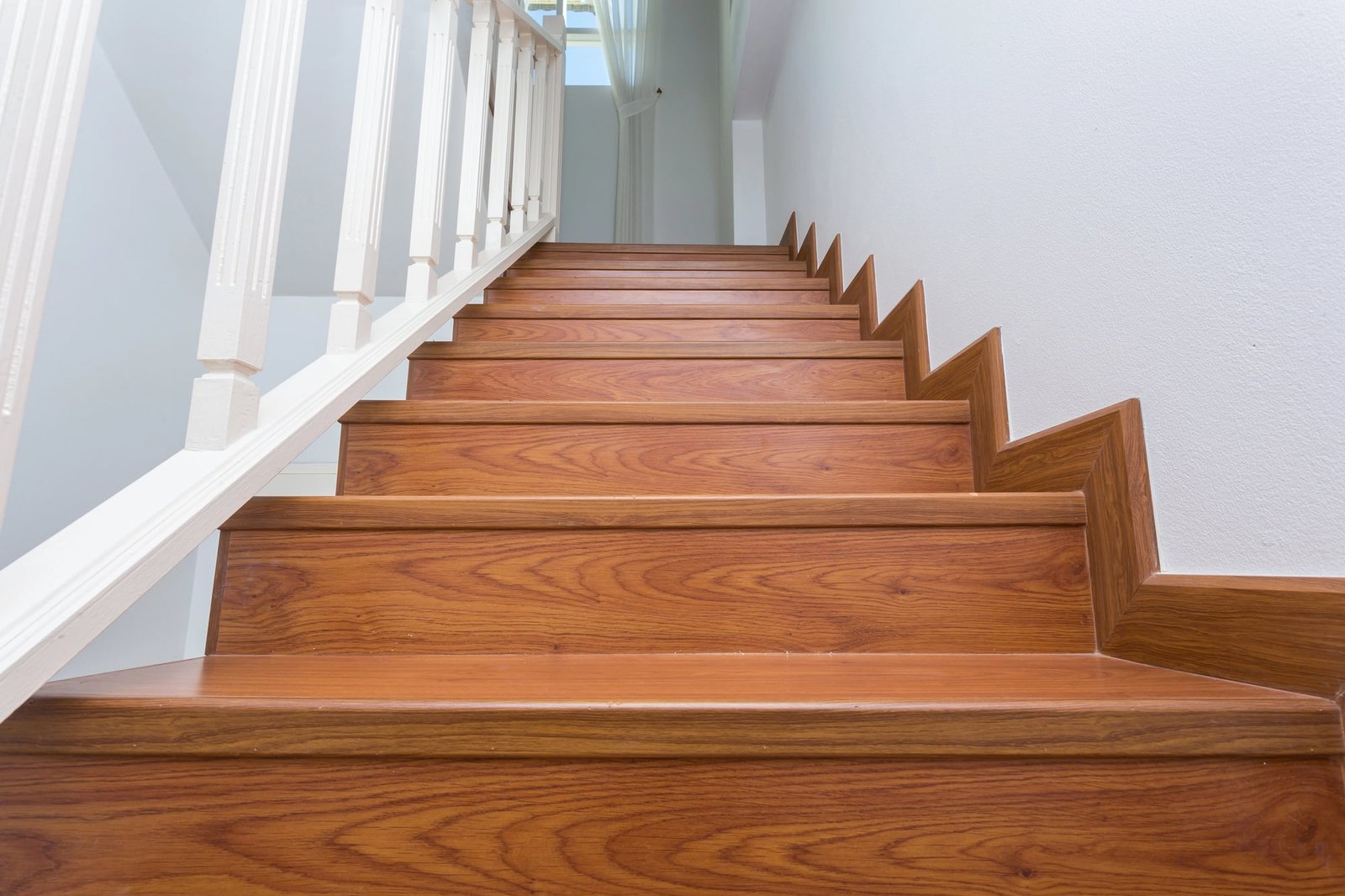
The specification decision on a hardwood stair project captures most of the professional attention — species selection, sawn profile, finish specification, and supplier qualification are the variables that experienced flooring professionals and remodeling contractors invest the most time evaluating before a project begins. The installation process that follows receives less structured attention in most trade contexts, and the gap between a red oak stair tread installation that performs flawlessly across decades of residential use and one that generates callbacks, warranty claims, and client dissatisfaction is almost always located in the installation details rather than the specification decisions that preceded them. For contractors and installers building Red Oak Stair Treads into a standard and repeatable installation practice, understanding the species-specific variables that affect installation outcome — adhesive selection, moisture management, fastening approach, and finishing sequence — is the technical foundation that separates consistently excellent results from inconsistent ones.
Red Oak as an Installation Material: The Species-Specific Variables
Red oak presents a combination of properties that make it an excellent stair tread material and an installation substrate that rewards attention to species-specific detail in equal measure. Its open grain structure, moderate tannin content, movement characteristics under seasonal moisture cycling, and finishing response each carry implications for installation decisions that generic hardwood installation guidance does not fully address.
The open grain structure of red oak — the defining characteristic that distinguishes it visually from the closed grain of white oak — is relevant at the installation stage because it affects adhesive penetration, finish absorption, and the dimensional behaviour of the tread surface under the moisture introduced by water-based finish products. An installer who understands how red oak’s grain structure interacts with each element of the installation process makes decisions at each stage that are calibrated to those characteristics rather than applied from a generic hardwood protocol that may not account for them.
The tannin content of red oak is moderate relative to highly tannic species like white oak and walnut — but present enough to be relevant in adhesive selection decisions where tannin reactivity with specific adhesive chemistries produces outcomes that affect the integrity and appearance of the installation. Understanding which adhesive formulations are compatible with red oak’s tannin content is the species-specific knowledge that prevents adhesive-related installation problems before they occur.
The seasonal movement characteristics of red oak — greater than white oak at equivalent dimensions due to the absence of the tyloses cellular feature that contributes to white oak’s relative stability — require moisture content management at delivery, acclimatisation before installation, and fastening approaches that accommodate the dimensional change the installed tread will experience across the seasonal moisture cycle of the installation environment.
Adhesive Selection: The Decision That Most Affects Long-Term Performance
The adhesive used to bond red oak stair treads to the underlying substrate is the installation decision that most directly determines the long-term structural integrity of the installation — and the one where species-specific knowledge most clearly differentiates an informed specification from a generic one.
Moisture-cured urethane adhesives are the professional standard for hardwood stair tread installation across species — and the first-choice specification for red oak treads specifically. Urethane adhesives cure through reaction with ambient moisture rather than through solvent evaporation or chemical mixing, producing a bond that is flexible enough to accommodate the seasonal dimensional movement of red oak across the moisture cycle without the cohesive or adhesive failure that rigid adhesive systems produce when the tread expands and contracts against a fixed bond line. The flexibility of a cured urethane adhesive bond is not a compromise of bond strength — it is a mechanical property that is specifically appropriate for bonding a dimensionally active material like red oak to a substrate that does not move at the same rate.
The tannin compatibility of the specific urethane adhesive selected for red oak installation is worth verifying with the adhesive manufacturer before application at scale. Most quality moisture-cured urethane adhesives formulated for hardwood flooring and stair tread installation are evaluated for compatibility with tannic species — but the range of urethane formulations available in the market is wide enough that verification is a worthwhile due diligence step rather than an unnecessary precaution.
Solvent-based contact adhesives — occasionally used in stair tread installations where immediate bond strength without clamping or fastening is operationally convenient — present a higher tannin reactivity risk with red oak than urethane systems and are generally not the appropriate specification for red oak tread installation where long-term bond integrity and clean glue lines are both required outcomes.
Epoxy adhesive systems offer high bond strength and chemical resistance that make them appropriate for specific installation contexts — treads installed over concrete substrates, installations in environments with elevated moisture exposure, and commercial applications where bond performance requirements exceed what urethane systems are specified for. The rigidity of cured epoxy is a consideration for red oak specifically — a tread bonded with a rigid epoxy system over a substrate that experiences differential movement relative to the tread may develop stress at the bond interface that a flexible urethane system distributes without consequence.
Moisture Content Management: The Variable That Determines Dimensional Stability
The dimensional stability of an installed red oak stair tread across the seasonal moisture cycle of its environment is determined more by the moisture content management decisions made before and during installation than by any post-installation variable. Red oak installed at a moisture content value significantly above the equilibrium moisture content of the installation environment will lose moisture after installation — contracting across the width of the tread and producing gaps at the tread ends, surface checking along the grain, and in severe cases, cupping across the tread width as the upper and lower faces of the tread dry at different rates.
The equilibrium moisture content of a residential interior environment varies by climate zone and season — typically between six and nine percent in most North American interior environments, with lower values in dry climates and heating seasons and higher values in humid climates and cooling seasons. Red oak stair treads delivered and installed within two to three percentage points of the expected equilibrium moisture content of the installation environment minimise the post-installation dimensional movement that produces the gap and checking problems most commonly associated with red oak stair tread installations.
Acclimatisation of red oak treads in the installation environment before installation is the practical method for bringing delivered moisture content into alignment with site conditions. Stacking treads loosely in the installation space — allowing air circulation around all surfaces — for a minimum of seventy-two hours, and ideally five to seven days in environments with significant seasonal moisture variation, allows the tread material to approach equilibrium with the ambient conditions before it is bonded and fastened in position.
Moisture content verification with a calibrated pin or pinless moisture meter at delivery and again immediately before installation provides the data needed to make an informed decision about whether additional acclimatisation time is required — and protects the installer from the post-installation consequences of installing treads whose moisture content was outside the acceptable range for the installation environment.
Fastening Approach: Adhesive, Mechanical, or Combined
The fastening approach for red oak stair treads — whether adhesive only, mechanical fastening only, or a combination of both — carries implications for both the structural integrity of the installation and the installation process itself that are worth resolving explicitly before the first tread goes down rather than defaulting to habit or available tooling.
Adhesive-only installation using a quality urethane adhesive produces a bond that is structurally adequate for residential stair tread applications where the substrate is flat, clean, and provides consistent bonding surface across the full tread depth. The advantages of adhesive-only installation are the absence of visible fastener holes in the finished tread surface and the elimination of the squeaking that mechanical fasteners can produce as the tread moves seasonally across metal fasteners that do not accommodate that movement. The constraint of adhesive-only installation is the requirement for adequate clamping or weighting of the tread during the adhesive cure period — typically twenty-four hours — to maintain consistent contact pressure across the full bonding surface.
Mechanical fastening through blind nailing at the back of the tread — driving nails or screws through the tread at an angle into the riser or carriage structure at a location that the installed riser or subsequent tread will cover — provides structural reinforcement of the adhesive bond without visible fastener penetrations in the finished tread surface. This combined approach is the standard specification for premium residential stair tread installations where both bond integrity and finished appearance are non-negotiable requirements.
Face fastening — driving fasteners through the top surface of the tread at visible locations — is appropriate in specific installation contexts where blind nailing access is not available and structural reinforcement of the adhesive bond is required, with fastener holes filled and finished after installation. The quality of the fill and finish at face fastener locations on red oak is a detail that requires attention to grain matching and colour consistency between the filler material and the surrounding tread surface — a detail that is particularly visible on red oak’s open grain under the raking light conditions of a residential staircase environment.
Finishing Red Oak Treads on Site: The Sequence That Determines the Outcome
For installations using unfinished red oak treads that will be site-finished after installation, the finishing sequence and the species-specific preparation steps that red oak requires are the final installation variables that determine the quality of the completed project.
Surface preparation for site-finishing red oak stair treads begins with sanding to a consistent grit across the full tread surface — typically completing at 100 or 120 grit for a stained finish or 150 grit for a natural or clear finish — with care taken to maintain consistent sanding direction with the grain to avoid the cross-grain scratches that read through stain and finish applications on red oak’s open surface.
Grain filler application before staining is the preparation step most frequently omitted on site-finished red oak installations and the one whose absence most directly affects the finished appearance of the installation under custom stain colours. Red oak’s open pores absorb stain at a different rate than the surrounding wood fibres — a differential that produces pronounced grain highlighting under medium and dark stain applications. Grain filler applied and sanded back before staining produces a more uniform stain penetration that reads as a colour decision rather than a material characteristic under the finished tread surface.
Wood Stair Co supplies red oak stair treads in unfinished and prefinished specifications — with moisture content standards, grade consistency, and dimensional accuracy built to the requirements of flooring dealers, remodeling contractors, homebuilders, and design professionals who need installation-ready product that performs to the standard their clients expect from every completed stair project.