




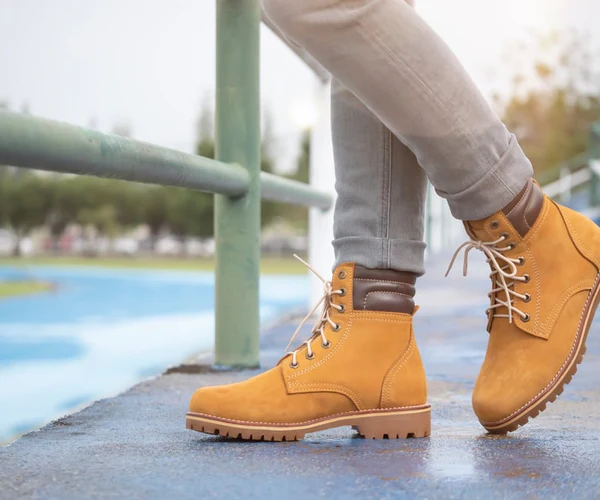
Not all leather boots are the same — and not all leather boot stretching situations are the same. The full-grain leather upper of a work boot, the waterproofed nubuck of a hiking boot, the polished dress leather of a western boot, and the tumbled leather of a casual everyday boot each respond to stretching interventions differently, tolerate different methods, and require different preparation and aftercare to emerge from the process with their material integrity intact. Generic stretching advice that treats leather as a single uniform material produces results that range from adequate to damaging depending on which type of leather it is applied to. Understanding how to stretch leather boots in a way that accounts for the specific leather type, construction, and fit problem of the boot in question is the approach that produces lasting results without the material damage that uninformed methods too frequently cause.
Full-Grain Leather Work Boots: The Highest Tolerance, The Longest Timeline
Full-grain leather — the most structurally intact form of leather, retaining the full thickness and fibrous density of the hide — is the most responsive and most forgiving leather type for stretching interventions. Its dense fibrous structure holds stretch results permanently once the fibres have been conditioned, reshaped under pressure, and allowed to set — which is precisely why full-grain leather work boots are the construction type where the widest range of stretching methods produce reliable results.
The most effective approach for full-grain leather work boots begins with a thorough conditioning treatment applied to the exterior and interior of the boot before any mechanical stretching is attempted. A quality leather conditioner — lanolin-based or neatsfoot oil formulation — penetrates the fibrous structure of full-grain leather effectively, restoring the suppleness and inter-fibre mobility that allows the material to respond to subsequent stretching pressure without surface cracking or grain damage. Allow the conditioner to absorb fully — typically thirty to sixty minutes — before proceeding to the stretching step.
A stretching spray applied to the interior of the boot at the specific areas of tightness immediately before inserting a boot stretcher creates a window of enhanced pliability during which the stretcher’s mechanical pressure produces more significant and more permanent dimensional change than the stretcher alone would achieve. Full-grain leather work boots benefit from leaving the stretcher in place for a minimum of twelve hours — longer for boots that require more than a quarter size of width expansion — and from allowing the boot to dry completely on the stretcher before removal.
The break-in period that follows deliberate stretching of full-grain leather work boots should be managed gradually. Two to three hours of wear per session across the first week after stretching allows the leather to continue conforming to the foot’s specific shape while the conditioner and stretching treatment are fresh, producing a fit improvement that compounds across the first several post-stretching wear sessions.
Waterproofed and Treated Hiking Boot Leather: The Finish Consideration
Hiking boots present a stretching challenge that work boots do not — the waterproofing treatments, DWR coatings, and membrane systems that define their performance in wet outdoor conditions interact with stretching interventions in ways that require careful method selection to avoid compromising the very performance characteristics that make hiking boots worth stretching rather than replacing.
The critical principle for stretching waterproofed hiking boot leather is moisture management. Methods that introduce significant external moisture — soaking in water, applying heavy water-based stretching sprays to the exterior — risk disrupting the DWR coating that causes water to bead on the boot surface rather than penetrate the leather. Interior stretching spray application avoids this risk entirely, and is the appropriate first method for waterproofed hiking boots where exterior finish integrity is a priority.
Heat application — a method sometimes suggested for accelerating leather stretching — is particularly inadvisable for hiking boots with membrane waterproofing systems. Gore-Tex and equivalent membranes are laminated to the boot’s interior liner at temperatures that concentrated heat application can approach, risking delamination of the membrane from the liner at precisely the interface that provides the waterproofing function. The performance consequence of membrane delamination — a hiking boot that leaks — is a more serious problem than the fit discomfort that prompted the stretching attempt.
For hiking boots that require width expansion at the toe box — the most common fit complaint in this category — a boot stretcher used with interior stretching spray and left in place overnight produces results that are adequate for most moderate fit corrections without the risks associated with moisture or heat applied to the exterior. Spot stretching plugs focused on specific pressure points at the little toe or ball of the foot address localised discomfort with the precision that general width expansion cannot replicate.
After any stretching treatment on a waterproofed hiking boot, reapplying the appropriate DWR reproofing treatment — whether a spray or wash-in product compatible with the boot’s specific waterproofing system — restores any surface treatment disruption that the stretching process may have introduced.
Western and Cowboy Boots: The Instep and Shaft Variables
Western boot stretching presents a unique set of considerations that reflect the construction geometry of the format — the high heel, the pointed or snip toe profile, and the tall shaft that defines the western silhouette each create stretching challenges that do not arise in laced boot constructions.
The instep is the most common and most consequential fit issue in western boot wear. The absence of lacing means that the instep — the highest point of the arch — is the primary structure holding the foot in the boot during wear. A boot that is too tight at the instep is genuinely uncomfortable and may be difficult to pull on and off. A boot that is too loose at the instep allows heel slip that no amount of shaft fit can compensate for.
Stretching a tight instep in a western boot requires conditioning the vamp — the front panel of the boot that sits against the instep — and wearing the boot with thick socks for extended periods while the leather is at its most pliable. A boot stretcher with a high-instep attachment applies mechanical pressure specifically to the instep area rather than expanding the width of the toe box, which is the appropriate tool for this specific fit correction. The pointed or snip toe geometry of many western boots means that a standard width-expanding stretcher must be used with attention to the toe profile — forcing a stretcher to its maximum width expansion in a pointed toe box risks distorting the toe geometry rather than simply expanding the width.
Shaft stretching for western boots with a tight calf fit requires a shaft stretcher — a cylindrical device that expands the circumference of the boot shaft — rather than the last-shaped foot stretcher appropriate for toe box and instep corrections. Conditioning the shaft leather before inserting the shaft stretcher and leaving it in place overnight produces reliable circumference expansion without the surface damage that attempting to stretch shaft leather without prior conditioning risks.
Casual and Fashion Leather Boots: The Surface Finish Priority
Casual and fashion leather boots span the widest range of leather types and surface finishes of any boot category — from full-grain smooth leather to suede, nubuck, patent leather, and embossed or printed leather surfaces that each require specific consideration before any stretching method is applied.
Smooth finished leather in casual boots responds well to the same conditioning and mechanical stretching approach appropriate for work boots, with the additional consideration that the surface finish — whether a pigmented or aniline dye application — should be assessed for sensitivity to the stretching spray formulation before application. Testing the stretching spray on a small, inconspicuous interior area before applying it to the full interior of a valued casual leather boot is a precautionary step that is always worth taking.
Suede and nubuck leathers — the brushed, napped surface finishes that define a significant proportion of the casual leather boot market — are the leather types most sensitive to moisture and the ones where method selection most directly affects the finished appearance of the boot after stretching. Water-based stretching sprays applied to suede and nubuck interiors can cause moisture to wick through the leather and reach the napped exterior surface, producing water staining that alters the appearance of the finish. Interior-only application with a minimal spray quantity, combined with careful management of the boot’s orientation during the stretching period to prevent moisture migration, reduces this risk without eliminating it entirely. For valuable suede or nubuck boots, professional cobbler stretching using dry mechanical methods is the lower-risk alternative to home stretching approaches that introduce moisture to the system.
BootsPlusMore carries work, hiking, casual, western, tactical, and sport leather boots across the full range of constructions and leather types that men and women across demanding and everyday use contexts require — with expertise and resources designed to support the long-term care, maintenance, and performance of quality leather footwear across years of use.
